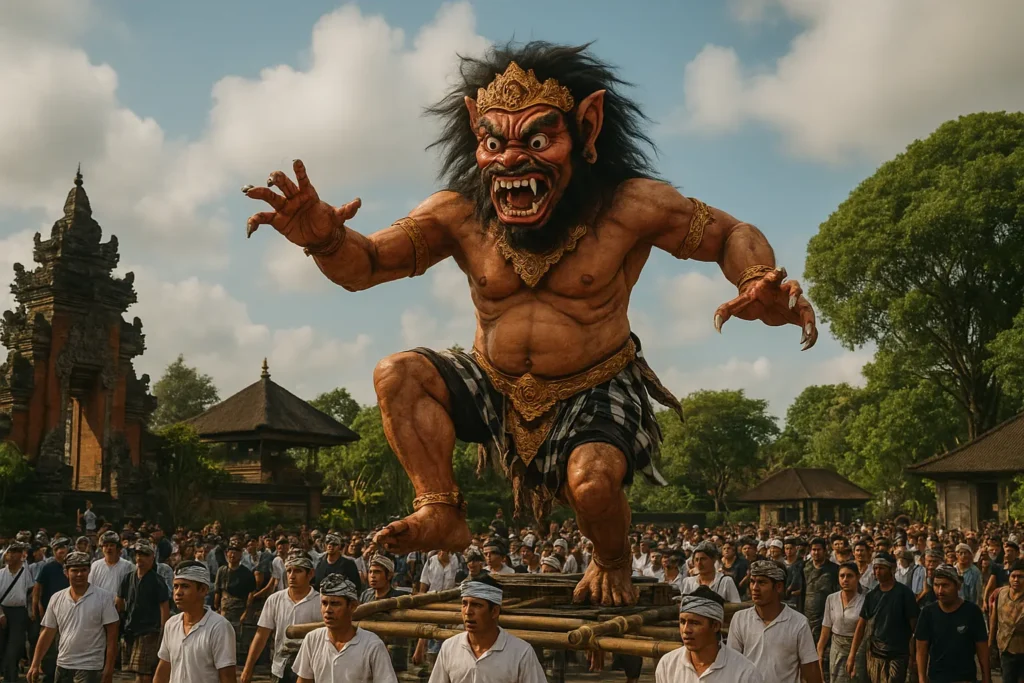
Bali, known for its mesmerizing landscapes and deeply spiritual culture, is home to some of the most profound and visually captivating traditions in the world. Among these, the Ogoh-Ogoh Bali ritual stands out as one of the island’s most dramatic and meaningful celebrations a spectacular fusion of art, spirituality, and community spirit.
Every year, on the eve of Nyepi (the Balinese Day of Silence), the streets of Bali transform into a surreal theater of light, fire, and noise. Towering demonic figures known as Ogoh-Ogoh parade through villages, accompanied by traditional music, torches, and chants. To an outsider, it may look like chaos, but behind this electrifying event lies centuries of spiritual philosophy the eternal struggle between good and evil.
The Origins of Ogoh-Ogoh Bali
The tradition of Ogoh-Ogoh is relatively modern in form but ancient in essence. The word “Ogoh” comes from the Balinese term meaning “to shake” or “to move,” symbolizing the restless nature of the evil spirits it represents. The practice gained prominence in the early 1980s, when it was officially incorporated into Nyepi Eve celebrations. However, the philosophical roots of Ogoh-Ogoh Bali go back much further deeply connected to Hindu teachings about purification and balance in the universe.
Ogoh-Ogoh statues are crafted to embody bhuta kala, the negative energies and demonic forces that exist within the cosmos and within human beings. According to Balinese Hindu belief, before the world can enter a state of renewal and silence on Nyepi Day, these malevolent forces must first be recognized, celebrated, and ultimately neutralized. The Ogoh-Ogoh parade is therefore not a festival of chaos it is an act of spiritual cleansing.
The Symbolism Behind the Demons
Each Ogoh-Ogoh is a masterpiece of symbolism. Built from bamboo, paper, styrofoam, and cloth, the statues often depict terrifying creatures grotesque demons with fangs, claws, and flaming eyes. Some are inspired by traditional mythological beings like Rangda (the witch queen) or Bhairawa, while others are modern interpretations representing human vices such as greed, anger, or arrogance.
These monstrous figures serve as a mirror to human behavior. In Balinese philosophy, the demons do not only exist in mythology they exist within each of us. The act of creating, parading, and eventually destroying the Ogoh-Ogoh symbolizes the purification of the mind and soul. It’s a vivid reminder that in order to achieve harmony, one must first confront inner darkness.
The Making of an Ogoh-Ogoh: Art Meets Devotion
The creation of an Ogoh-Ogoh Bali statue is a communal effort that takes weeks, sometimes months, of preparation. Artists, villagers, and youth groups (known as sekaa teruna) come together to design and build their giant effigies.
The process begins with a bamboo frame, which is then wrapped in paper or cloth and painted in intricate detail. Every color and pattern carries meaning red for passion, black for darkness, and gold for divinity. The work is done with both artistic precision and spiritual mindfulness. In many villages, the act of crafting the Ogoh-Ogoh is seen as an offering in itself, a form of devotion that purifies the maker as much as it symbolizes cleansing for the entire community.
In recent years, some artists have begun using recycled materials to promote environmental awareness, adding a contemporary message to this traditional ritual. Despite evolving techniques, the essence remains unchanged: every Ogoh-Ogoh is a reflection of balance, beauty, and belief.
The Night Before Silence: When the Demons Dance
The highlight of the Ogoh-Ogoh Bali tradition unfolds during the evening before Nyepi, known as Pengerupukan. As the sun sets, villages across Bali come alive with sound and spectacle. The air fills with the deep rumble of kendang drums, the clash of ceng-ceng cymbals, and the rhythmic chanting of locals.
The Ogoh-Ogoh effigies, now towering up to 5 meters high, are lifted onto bamboo platforms carried by young men. With synchronized movements, they spin and sway the statues through the streets a hypnotic dance symbolizing the chaos of the human mind. Firecrackers and torches light up the night as the crowd cheers, the energy reaching its climax before calm finally descends.
At the end of the parade, the Ogoh-Ogohs are often burned or symbolically destroyed. The act represents the cleansing of the island from spiritual impurities, preparing Bali for the silent day of Nyepi that follows a day of total stillness, reflection, and renewal.
A Traveler’s First Experience of Ogoh-Ogoh in Bali
“I had read about Nyepi before coming to Bali,” writes a traveler from Canada, “but nothing prepared me for the intensity of the Ogoh-Ogoh night. The entire village was vibrating with drums, laughter, and firelight. When the massive demon statue spun in front of me, I felt both fear and awe as if witnessing something sacred yet primal. And then, the next morning, absolute silence. It was as though the world had been reset.”
This contrast between chaos and calm is what makes Ogoh-Ogoh Bali so unforgettable. It’s a living metaphor for the cycle of life, death, and rebirth; a reminder that peace can only come after facing one’s demons.
Where to See the Best Ogoh-Ogoh Parades in Bali
While nearly every Balinese village celebrates the event, some areas are especially famous for their elaborate and artistic processions:
- Denpasar City: The capital offers the largest and most organized parades, especially around Puputan Square.
- Ubud: Known for its artistic community, Ubud’s Ogoh-Ogoh figures are highly detailed and often infused with creative modern symbolism.
- Gianyar and Singaraja: Traditional strongholds where you can see authentic, community-led parades that retain deep ritual meaning.
- Canggu & Seminyak: These coastal areas have begun hosting smaller parades that mix traditional and contemporary art styles, attracting both locals and expats.
Wherever you go, respect is essential remember that while the event is visually spectacular, it is still a sacred spiritual ritual.
Nyepi Day: The Silence After the Storm
Following the fiery spectacle of Ogoh-Ogoh Bali, Nyepi Day marks a dramatic shift in energy. For 24 hours, the entire island shuts down. No flights, no traffic, no lights, and no noise. Even tourists are expected to stay indoors. The stillness is profound a collective act of introspection and gratitude.
In Balinese Hindu philosophy, this silence allows the gods to restore balance to the world. The day is divided into four key prohibitions known as Catur Brata Penyepian: no fire (amati geni), no travel (amati lelungan), no activity (amati karya), and no entertainment (amati lelanguan). After the symbolic destruction of evil through the Ogoh-Ogoh, Nyepi represents the rebirth of purity and peace.

Why Ogoh-Ogoh Bali Matters Today
Beyond its religious roots, Ogoh-Ogoh Bali has evolved into a celebration of art, unity, and cultural identity. It bridges generations from elders who preserve sacred rituals to young artists experimenting with new ideas. In a world increasingly driven by noise and speed, this Balinese tradition offers something profoundly rare: a reminder to pause, to cleanse, and to reconnect with the essence of life.
Whether you’re standing in the middle of Denpasar’s crowded streets or watching a small village parade under the stars, the experience of Ogoh-Ogoh will stay with you. It’s not just about seeing demons burn it’s about feeling the soul of Bali itself. Also read our article about Escape the Crowd Why Taro Village Bali Should Be on Your List
FAQ About Ogoh-Ogoh Bali and Nyepi Day
Ogoh-Ogoh Bali are giant demonic statues created and paraded on the eve of Nyepi Day (Balinese Day of Silence). They symbolize bhuta kala evil spirits and negative energies that must be cleansed before entering a new year. The parade serves as a spiritual and artistic ritual to purify the island and restore balance between humans and the cosmos.
The Ogoh-Ogoh Parade happens the night before Nyepi, usually in March, depending on the Balinese lunar calendar (Saka New Year). The event starts around sunset and continues until late evening, just before the island falls into complete silence for 24 hours on Nyepi Day.
You can witness Ogoh-Ogoh Bali parades in nearly every village, but some of the most spectacular ones take place in:
Denpasar (Puputan Square): The largest and most elaborate displays.
Ubud: Known for artistic, creatively detailed statues.
Gianyar and Singaraja: Offer more traditional, community-led celebrations.
Each location gives a unique cultural experience from artistic interpretations to sacred, ancient rituals.