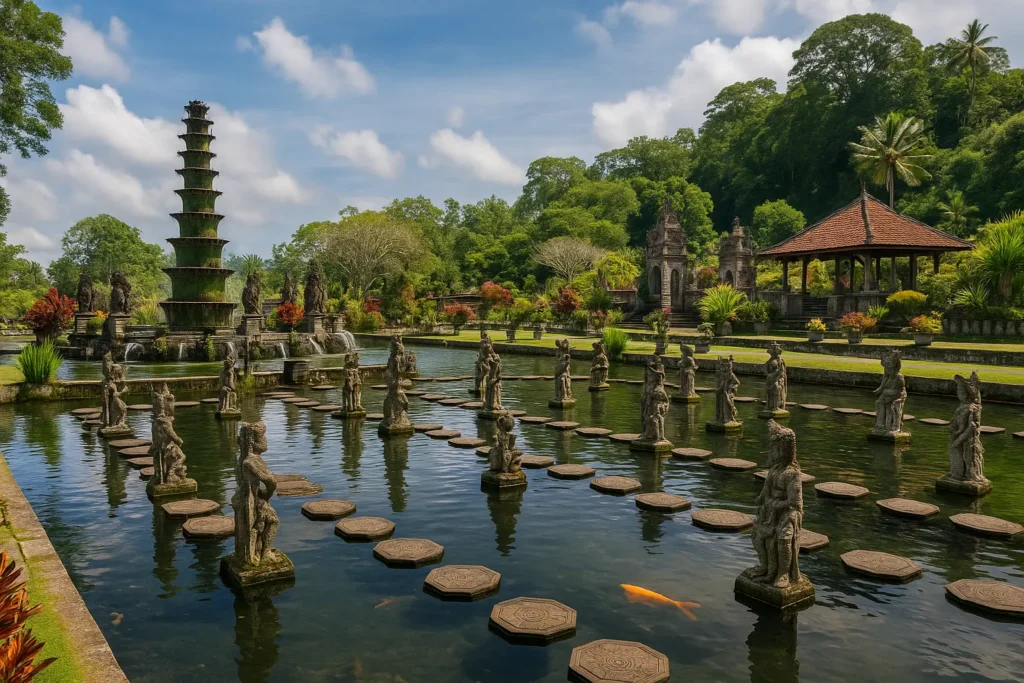
Bali is full of iconic temples, waterfalls, and beaches but step into East Bali and you’ll discover something different. A place where the island’s royal legacy flows gently through freshwater pools, koi-filled ponds, and intricate stone carvings. This is Tirta Gangga, the legendary water palace of Karangasem.
For travelers seeking a quieter, culturally enriched escape away from the crowds of Ubud and Seminyak, Tirta Gangga offers a window into Bali’s royal past, spiritual traditions, and architectural brilliance. Built not just as a garden but as a sanctuary of peace, purification, and devotion Tirta Gangga stands as one of the island’s most meaningful heritage sites.
If you’ve ever wondered what makes Tirta Gangga one of Bali’s most beloved cultural landmarks, this guide will uncover its history, meaning, and tips on how to enjoy the experience like a true traveler.
What Is Tirta Gangga? A Royal Water Palace With Sacred Meaning
The name Tirta Gangga translates to “Water from the Ganges”, referencing the sacred river in India. Though the palace itself is Balinese, the name reflects the strong influence of Hindu spiritual philosophy on the island.
Tirta Gangga was built in 1946 by the last king of Karangasem, Anak Agung Anglurah Ketut Karangasem, who was known not only as a ruler but also as an artist and visionary. The palace is a symbol of purity, prosperity, and spiritual cleansing concepts deeply rooted in Balinese Hindu beliefs.
Walking through its gardens today, travelers encounter:
- fresh water pools fed by natural springs
- stone statues of deities and mythical creatures
- step-on water platforms perfect for scenic photos
- ornamental fountains rising over lush lotus ponds
What makes Tirta Gangga exceptional is its combination of sacred functions and royal leisure. It served both as a place of worship and a relaxation retreat for the royal family.
The History of Tirta Gangga: A Legacy of the Karangasem Kingdom
To understand the depth of Tirta Gangga’s beauty, it’s essential to explore its origins. The palace was constructed shortly after World War II at a time when Bali was transitioning politically yet holding tightly to spiritual and cultural identity.
The Royal Builder
King Anak Agung was known for his appreciation of water, peace, and artistic architecture. He designed Tirta Gangga not only as a monument to holiness but as a place where nature, spirituality, and beauty merge seamlessly.
Almost Lost to Time
In 1963, Mount Agung erupted violently, destroying much of the palace. But the people of Karangasem restored it by hand with deep devotion, “reviving the water palace from ashes” as locals say.
Today, Tirta Gangga stands as a testament to cultural resilience and Balinese reverence for sacred water (tirta).
What to See in Tirta Gangga: A Complete Exploration
Visitors often think Tirta Gangga is “just a garden,” but it is far more intricate. Here are the highlights you should not miss.
1. The Iconic Stepping Stones
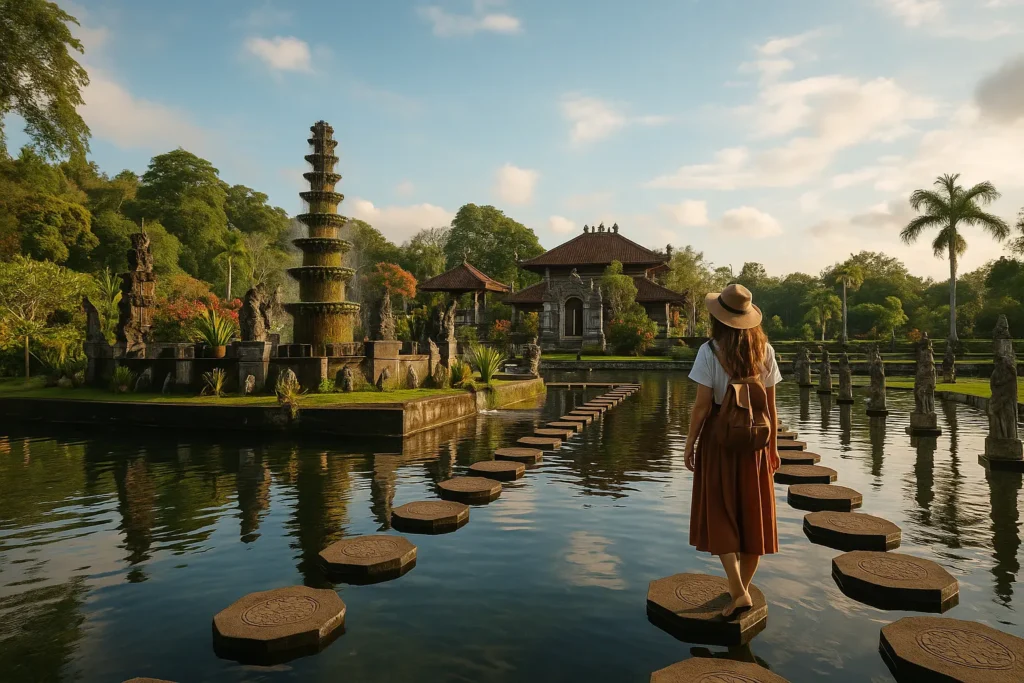
Perhaps the most photographed feature of Tirta Gangga, the stepping stones invite travelers to walk across the pond surrounded by koi fish and guardian statues. This spot is visually stunning during early sunlight when reflections shimmer on the water.
Why It’s Special
It represents the path toward spiritual clarity each step symbolizing harmony of mind and soul.
2. The Eleven-Tier Fountain
Standing tall at the palace’s center, this multi-tiered fountain, called the Nawa Sanga Fountain, represents the nine guardians of the universe. Its water flows endlessly, symbolizing nourishment and balance.
3. The Bathing Pools
Unlike many heritage sites in Bali, Tirta Gangga allows visitors to swim in designated pools. These pools are filled with natural spring water believed to have purifying qualities.
Travel Tip
Bring swimwear and a towel if you plan to dip in. The water is refreshingly cool perfect for hot afternoons.
4. Stone Statues and Mythical Creatures
Throughout the palace, stone carvings of gods, demons, and traditional Barong figures guard every corner. These statues tell stories of Hindu mythology and ancient Balinese belief.
5. The Upper Garden Area
This higher-level section offers peaceful views of the entire palace and surrounding rice terraces. It’s one of the most serene corners of Tirta Gangga, ideal for meditation or quiet reflection.
A Traveler’s First Impression: A Short Narrative
Stepping through the palace gates just after sunrise, I was greeted by a blanket of gentle mist hovering above the ponds. The sound of flowing water echoed between stone statues, as koi fish swirled in orange and gold beneath the surface.
A Balinese elder sweeping leaves near the fountain glanced up with a warm smile and said softly:
“Air ini suci… it heals the heart.”
In that moment, the meaning of Tirta Gangga felt clear not just a place to see, but a place to feel.
Best Time to Visit Tirta Gangga
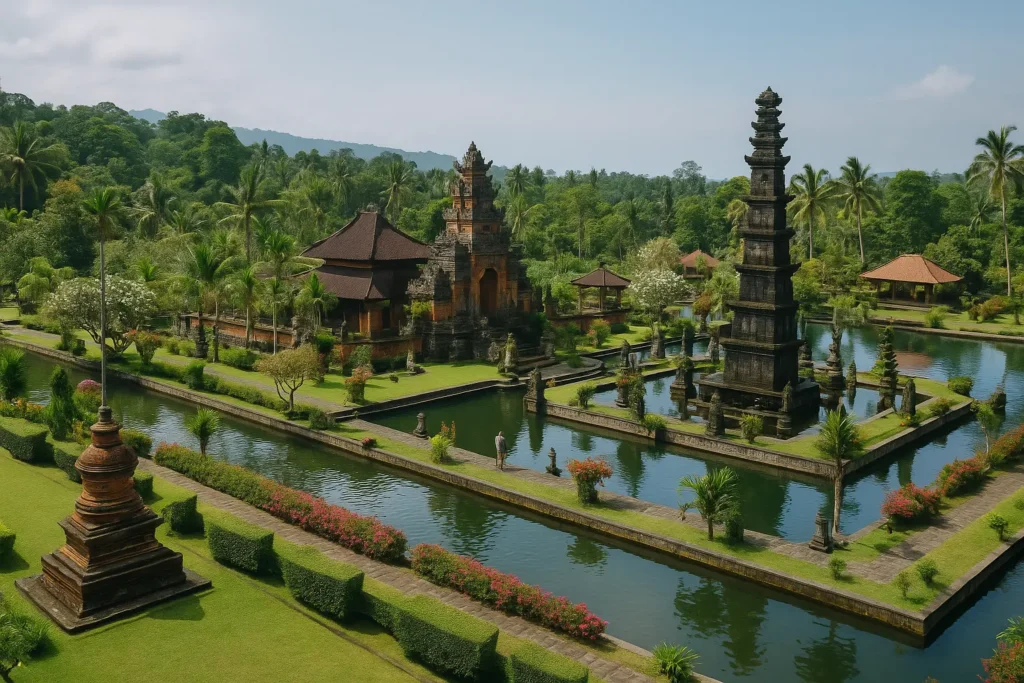
Because Tirta Gangga is popular among both locals and internationals, timing your visit can transform the experience. Location!
Morning (7–9 AM)
- Soft lighting
- Fewer crowds
- Best for photography
- Peaceful and spiritual
Late Afternoon (3–5 PM)
- Warmer colors
- Beautiful sunset glow
- Cooler weather
Avoid visiting between 10 AM – 2 PM if you want quieter, more relaxed surroundings.
Practical Travel Tips for Your Tirta Gangga Visit
Entrance Fee Fees are affordable, typically around IDR 25K–30K for adults. Swimming pool has an additional fee.
Parking Available nearby but can fill up during peak hours.
Dress Code There is no strict temple dress requirement, but modest attire is recommended out of respect.
Photography Drone usage may be limited; always check local rules.
Food & Facilities Several small cafés nearby offer drinks and simple meals with views of the water palace.
Accessibility Pathways include steps and uneven stones comfortable walking shoes are recommended.
Nearby Attractions You Shouldn’t Miss
Because Tirta Gangga is located in East Bali, it is close to several must-see heritage locations:
1. Lempuyang Temple (Gate of Heaven) One of Bali’s most iconic spiritual temples with panoramic views of Mount Agung.
2. Taman Ujung Water Palace Another Karangasem royal site featuring expansive gardens, ponds, and historical architecture.
3. Rice Terraces of Ababi Quiet, untouched terraces showcasing rural life in East Bali.
4. Traditional Villages Villages around Karangasem offer authentic glimpses of daily Balinese life.
Understanding the Cultural Meaning of Tirta Gangga
When exploring Tirta Gangga, you’re not just walking through a garden you’re stepping into a place shaped by ancient philosophy.
Water as a Symbol of Life In Balinese Hindu belief, water (tirta) purifies the soul and restores harmony.
Balance of Architecture and Nature Tirta Gangga’s layout reflects cosmic balance: water, earth, and spirit in perfect unity.
Royal Heritage The palace honors the artistic legacy of the Karangasem royal family, reminding visitors of Bali’s deep historical roots.
Final Thoughts
If Ubud is the heart of Bali’s culture, then Tirta Gangga is its serene soul. From its sacred pools and royal gardens to its historical roots and tranquil atmosphere, the water palace offers a rare glimpse into Bali’s spiritual and artistic identity. A visit here is more than sightseeing it’s a journey into heritage, devotion, and harmony. Also read our article about Melukat Ritual in Bali – Cleanse Your Mind, Body, and Spirit by Sacred Water
FAQ – Tirta Gangga Travel Guide
A royal water palace in East Bali featuring sacred pools, fountains, koi ponds, and lush gardens.
In the Karangasem Regency, approximately 2 hours from Ubud.
Yes, designated spring-water pools are open for public swimming.
Its combination of sacred symbolism, royal heritage, and stunning water architecture.
Yes, especially midday. Morning visits offer a quieter, more spiritual experience.