Bali is famous for its beaches, temples, and warm hospitality but beyond the island’s beauty lies a deep spiritual heartbeat that shapes daily life. Among the many sacred ceremonies in Bali, Galungan stands as one of the most important. If you’ve ever visited Bali and seen tall bamboo poles decorated with coconut leaves lining the streets, you’ve already witnessed a glimpse of this vibrant celebration.
For travelers who want to understand Balinese culture at a deeper level, learning what is Galungan opens a window into the philosophy, spirituality, and unique identity of the island. Galungan is more than just a festival; it is a 10-day celebration of life, gratitude, and the eternal triumph of good over evil. This guide will help you understand its meaning, rituals, symbolism, and how to respectfully experience it as a visitor.
Table of Contents
ToggleWhat Is Galungan?
Galungan is a major Balinese Hindu festival held every 210 days, marking the victory of Dharma (universal good) over Adharma (universal chaos or evil). During this sacred period, Balinese Hindu families believe that ancestral spirits return to earth to visit their descendants. Homes, temples, and villages are filled with prayers, offerings, and gratitude.
So, what is Galungan in simple terms?
It is a spiritual reminder that goodness must always be cultivated, protected, and fought for even in everyday life.
The core themes of Galungan are:
- Balance between the seen and unseen worlds
- Respect for ancestors and divine forces
- Renewal of harmony in the universe
- Reflection on one’s spiritual path
For travelers, Galungan offers a chance to witness how deeply spirituality flows through Balinese culture even in modern life.
The Story Behind Galungan: How the Celebration Began
To truly understand what is Galungan, it helps to look into the mythology behind it. The story centers around a powerful king named Mayadenawa, who ruled Bali with arrogance and denied the existence of the gods. His tyranny caused suffering across the island.
The gods, led by Lord Indra, descended to Bali to fight him and restore balance. After a fierce battle, Indra triumphed, symbolizing the victory of Dharma over Adharma. Galungan commemorates this sacred victory.
This mythology also explains:
- The meaning of Penampahan Galungan (the day evil forces are subdued)
- The purpose of offerings (to honor the gods who brought balance)
- The philosophy behind harmony in Balinese society
The Tall Bamboo Poles You See Everywhere: What Is Penjor?
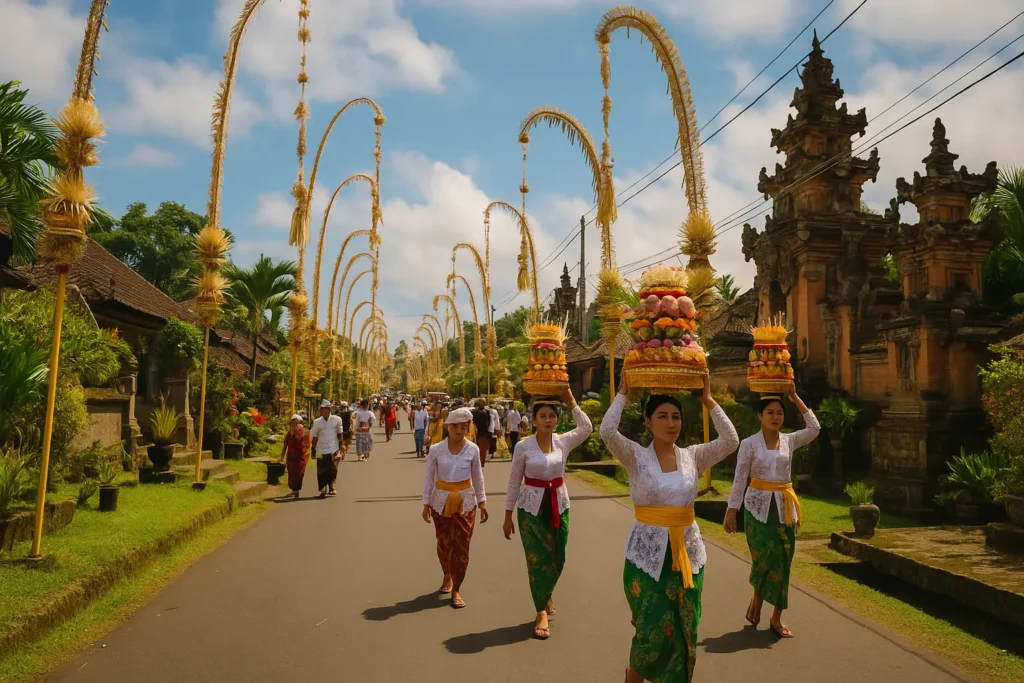
No Galungan celebration feels complete without penjor tall, curved bamboo poles beautifully decorated with coconut leaves, flowers, and offerings. These line almost every street in Bali during the celebration.
Penjor symbolize:
- Gratitude for prosperity, represented by rice, fruits, and leaves
- Mount Agung, the sacred mountain and home of the gods
- The path of Dharma, guiding spirits back to heaven
- Nature’s abundance, which blesses human life
When tourists ask “What is Galungan and why are these bamboo poles everywhere?”the answer lies in the deep symbolism of penjor, representing divine presence and blessings.
The 10-Day Galungan Celebration: What Happens Each Day
Although the main celebration lasts two days, the full Galungan cycle spans 10 days, ending with Kuningan.
1. Wuku Dungulan (Preparation Week)
Families clean their homes and prepare offerings. Traditional food like lawar, satay, and ceremonial cakes is made.
2. Penampahan Galungan (The Day Before Galungan)
A day of purification. Families prepare special offerings and eliminate negative energies, symbolizing the defeat of Adharma.
3. Galungan Day
The main day of prayer. Ancestral spirits return, and families visit temples and make offerings at home shrines.
4. Manis Galungan (The Day After)
A joyful day for visiting relatives, taking walks, and enjoying good food.
5. Until Kuningan (10 Days After Galungan)
On Kuningan, the spirits return to heaven. Offerings include yellow rice and symbolic items representing divine gratitude.
A Traveler’s First Galungan Experience (Mini Story)
I still remember my first Galungan in Ubud. The usually quiet street suddenly transformed women walked gracefully with towers of offerings on their heads, children wore new traditional clothes, and rows of penjor swayed like golden gateways. The scent of incense curled through the air. Even as an outsider, I felt the warmth and serenity of the celebration.
A local elder smiled and said,
“Today, the ancestors come home. We welcome them with beauty.”
In that moment, I understood that what is Galungan is not just a holiday it’s a reunion between the living world and the spiritual world.
Where to Experience Galungan in Bali
Travelers are welcome to observe cultural and spiritual activities, as long as they show respect. Some recommended places include:
1. Tirta Empul Temple (Manukaya Village)
Famous for its holy springs. During Galungan, locals come for purification rituals. Location
2. Pura Besakih (Mother Temple of Bali)
The largest and holiest Hindu temple complex. Rituals are grand and spiritually powerful. Location
3. Village Temples (Pura Desa, Pura Puseh, Pura Dalem)
Every village celebrates with unique traditions and beautifully decorated penjor.
4. Ubud and Gianyar Region
Known for traditional ceremonies, family compounds, and cultural authenticity.
What Tourists Should Know Before Attending Galungan
Respect Dress Code
- Wear a sarong and sash
- Avoid revealing clothing
Behave Respectfully
- Do not block ceremonial processions
- Ask before taking photos
- Never touch offerings
Know Your Space
Certain temple areas are restricted to worshippers only.
Best Time to Observe
Morning prayers (7–11 AM) offer the most cultural insight.
Why Galungan Is Important to Balinese Identity
Galungan reminds the Balinese that:
- Goodness must be protected
- Balance is essential
- The unseen world is as real as the seen
- Families are central to spiritual life
- Gratitude keeps life harmonious
To understand what is Galungan is to understand the very essence of Balinese spirituality.
Final Thoughts
Galungan is not just a festival it is a spiritual journey, a celebration of cosmic balance, and a moment where the earthly world connects with the divine. For travelers seeking deeper cultural understanding, witnessing Galungan offers a profound perspective into Balinese life.
The next time you see penjor rising over Bali’s roads or families walking gracefully to temples, you’ll know the deeper story behind the beauty. Also read our article about Journey into Cultural Bali: Rituals, Dance, and Living Traditions
What You Need to Know About Galungan
Galungan is a sacred festival celebrating the victory of Dharma (good) over Adharma (evil). It is one of Bali’s most important religious ceremonies.
Every 210 days, based on the Balinese Pawukon calendar.
They are called penjor and symbolize gratitude, nature’s abundance, and divine blessings.
Yes, as long as they respectfully observe temple etiquette, dress appropriately, and avoid restricted worship areas.
Galungan marks the arrival of ancestral spirits, while Kuningan marks their return to heaven 10 days later.